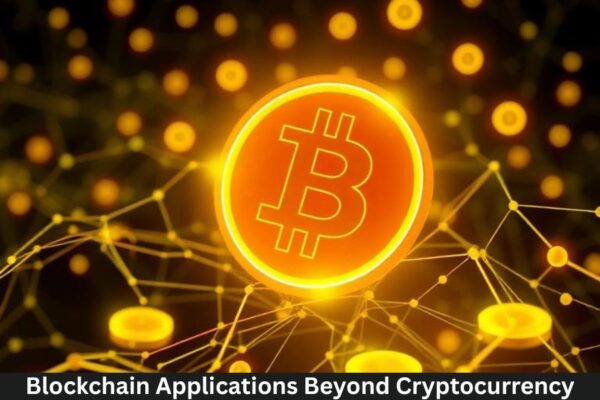
Blockchain has gained worldwide attention thanks to cryptocurrencies like Bitcoin and Ethereum. But here’s the real story: blockchain is so much bigger than digital money. It’s a technology that’s reshaping industries, boosting security, removing middlemen, and building trust in places where trust was nearly impossible.
The Evolution of Blockchain Technology
Originally created to support digital currencies, blockchain has evolved dramatically. Today, it stands as a powerful foundation for transparency, decentralization, and secure record-keeping across countless sectors.
Why Blockchain Is More Than Just Bitcoin
While Bitcoin popularized the idea, the true power of blockchain lies in its ability to create an unchangeable digital ledger. This makes it perfect for supply chains, healthcare, voting systems, identity management, and more.
Understanding Blockchain Technology
How Blockchain Works
Imagine a chain of digital “blocks,” each containing data. Every block is linked to the previous one, making the chain extremely difficult to alter. This decentralized structure ensures no single party controls the information.
Key Features That Make Blockchain Powerful
- Decentralization reduces the risk of tampering.
- Transparency ensures data can be verified by multiple parties.
- Security uses cryptography to protect records.
Public vs. Private Blockchains
- Public blockchains are open and accessible to everyone.
- Private blockchains are controlled by organizations for internal use.
Both have unique advantages depending on the application.
Blockchain in Supply Chain Management
End-to-End Transparency
Products travel long journeys from factory to store shelves. Blockchain tracks every step, helping companies and consumers know exactly where items come from.
Preventing Counterfeits
Fake products plague industries like luxury goods, electronics, and pharmaceuticals. Blockchain’s traceability helps verify authenticity instantly.
Real-Time Tracking and Verification
Companies can instantly check product locations, transport conditions, and delivery timelines, reducing delays and fraud.
Blockchain in Healthcare
Secure Patient Data Management
Medical data breaches are costly and dangerous. Blockchain keeps patient records secure and accessible only to authorized parties.
Interoperability Between Health Systems
Hospitals often struggle to share data. Blockchain makes data-sharing easier, safer, and faster—leading to better patient care.
Pharmaceutical Traceability
Counterfeit drugs are a global problem. Blockchain provides end-to-end tracking so every pill can be traced back to the manufacturer.
Blockchain in Education
Digital Credentials and Certificates
Diplomas and certificates can be easily forged. Blockchain creates verified, tamper-proof academic credentials.
Secure Transcript Management
Students can share their transcripts with employers or universities without delays or paperwork.
Verification of Academic Records
Organizations can verify achievements instantly—no more waiting months for manual verification.
Blockchain in Finance (Beyond Crypto)
Smart Contracts
Smart contracts are self-executing agreements stored on blockchain. No middlemen, no delays—just automatic fulfillment when conditions are met.
Cross-Border Payments
Traditional international banking is slow and expensive. Blockchain speeds up the process and reduces fees.
Fraud Reduction and Audit Trails
Blockchain creates transparent records, making financial fraud easier to detect and harder to commit.
Blockchain in Real Estate
Streamlined Property Transactions
Buying property often involves mountains of paperwork. Blockchain reduces complexity by storing contracts and property data digitally.
Tokenized Real Estate Investments
With tokenization, investors can buy “shares” of real estate properties, making high-value assets accessible to more people.
Transparent Title Management
Property titles stored on blockchain are harder to forge and easier to transfer.
Blockchain in Government and Public Services
Secure Voting Systems
Blockchain voting could eliminate fraud, increase voter turnout, and ensure fair elections.
Identity Management
Decentralized digital IDs give citizens control over their personal information.
Transparent Public Records
Public records like land deeds, tax filings, and licenses become more secure and easier to audit.
Blockchain in Intellectual Property
Protecting Creative Ownership
Artists, musicians, and writers can register their work on blockchain to prove ownership.
Tracking Royalty Payments
Creators can receive royalties automatically through smart contracts—no more unpaid earnings or missing records.
Blockchain in the Energy Sector
Peer-to-Peer Energy Trading
Homeowners with solar panels can sell excess power directly to neighbors using blockchain.
Grid Management and Decentralized Energy
Blockchain enables better tracking of energy usage and reduces reliance on centralized energy companies.
Challenges and Limitations of Blockchain
Scalability Issues
As blockchains grow, they can become slower and require more storage.
Regulatory Uncertainty
Governments are still figuring out how to regulate blockchain applications.
High Energy Consumption (for some blockchains)
Proof-of-work blockchains consume large amounts of energy, though newer systems are far more efficient.
The Future of Blockchain Technology
Integration with AI and IoT
When combined with artificial intelligence and smart devices, blockchain can automate entire ecosystems with trust and transparency.
Widespread Enterprise Adoption
From logistics to banking, industries are increasingly embracing blockchain for efficiency and security.
Decentralized Digital Ecosystems
The future points toward a world powered by decentralized apps, platforms, and networks—reducing reliance on centralized authorities.
Conclusion
Blockchain is no longer just the backbone of cryptocurrencies—it’s a revolutionary technology reshaping industries across the globe. From healthcare to real estate and supply chains to voting systems, blockchain is unlocking new levels of trust, transparency, and efficiency. As challenges are solved and adoption grows, blockchain will continue to transform the digital world in ways we’re only beginning to understand.
FAQs
1. What makes blockchain useful beyond cryptocurrency?
Its transparency, security, and decentralization make it ideal for many industries beyond finance.
2. Which industries benefit most from blockchain?
Healthcare, supply chains, real estate, government services, and energy are among the top adopters.
3. Are blockchain applications secure?
Yes—blockchain uses advanced cryptography, making data extremely difficult to alter.
4. Is blockchain expensive to implement?
Costs vary, but many modern blockchain systems are becoming more affordable for businesses.
5. What does the future of blockchain look like?
Expect deeper integration into everyday systems, especially with AI and smart devices.