Have you ever come across the term “Apothorax” and wondered what exactly it means? You’re not alone. Many students encounter this term in biology notes or online resources and get confused because it’s not widely discussed in modern anatomical textbooks. However, understanding terms like these can help you build a clearer picture of how the human body is organized.
Why Understanding Body Regions Matters
Knowing where major organs are located helps you understand how the body functions, how diseases affect specific regions, and how different systems work together.
The Confusion Around the Term “Apothorax”
The word “apothorax” is not commonly used in modern anatomy. It appears mostly in older texts or student-level explanations to help describe the lower part of the thoracic cavity. Let’s break it down properly.
What Is the Apothorax?
The Correct Definition
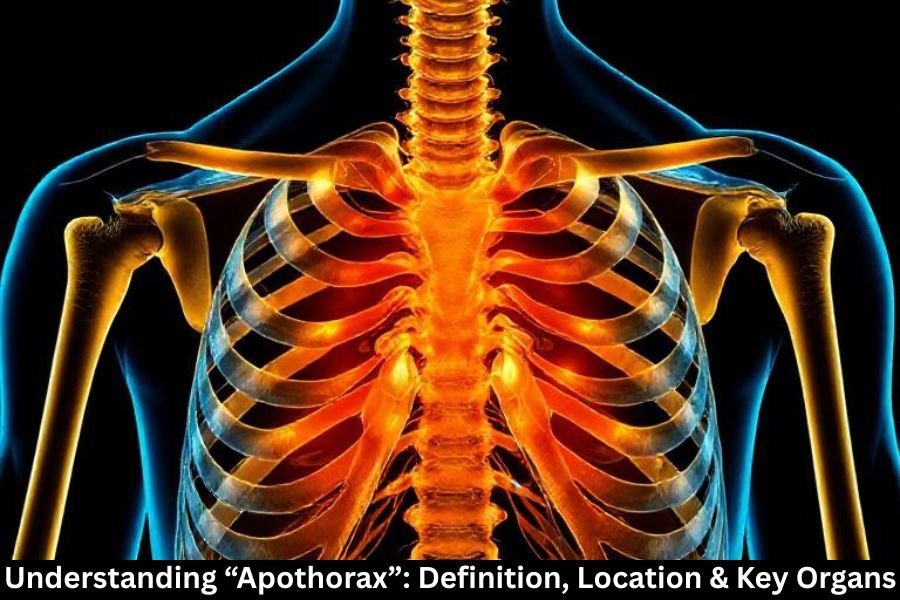
The apothorax refers to the lower portion of the thorax, located between the ribs and the diaphragm. It is a conceptual region used to describe the area containing vital organs such as parts of the heart and lungs.
How the Term Originated
The term is derived from classical roots referring to a “supporting” or “lower” part of the thoracic region.
Common Misinterpretations
Some people confuse apothorax with:
- The entire thorax
- The diaphragm
- The abdominal cavity
But it’s specifically the lower thoracic region.
Location of the Apothorax
Anatomical Position
The apothorax sits in the lower chest area, just above the diaphragm.
Boundaries of the Apothorax
Upper Boundary
Lower edge of the mid-thorax.
Lower Boundary
The diaphragm — the muscular sheet separating the chest and abdomen.
Lateral Boundary
The lower ribs and intercostal muscles.
Relation to Surrounding Structures
- Above: Middle thorax
- Below: Abdominal cavity
- Behind: Vertebral column
- Front: Sternum
Key Organs Found in the Apothorax
Heart
The lower chambers (ventricles) rest within this region.
Lungs
The lower lobes of both lungs occupy a major portion of the apothorax.
Major Blood Vessels
This includes the:
- Inferior vena cava
- Descending aorta
- Pulmonary vessels
Thymus Gland
Prominent in children and shrinks with age but partially extends into the lower thorax.
Major Functions of the Apothorax Region
Role in Respiration
The lower lungs allow oxygen exchange, and the diaphragm below supports breathing.
Role in Blood Circulation
The heart pumps blood throughout the body, and this region houses critical vessels.
Contribution to Immunity
The thymus plays a role in producing T-cells during childhood.
How the Apothorax Protects Vital Organs
Ribcage Protection
The ribs act like a shield, guarding the chest organs.
Cushioning Tissues
Muscles and cartilage provide shock absorption.
Muscular Support
Intercostal muscles help with breathing and maintaining structural integrity.
Differences Between Apothorax and Thorax
Key Distinctions
- Thorax: Entire chest cavity.
- Apothorax: Lower segment of the thorax.
Why the Terms Are Often Confused
Both relate to the chest, but apothorax is more specific and less commonly taught.
Which Term Is Scientifically Accurate?
“Thorax” is the official anatomical term, while “apothorax” is descriptive and educational.
Common Conditions Affecting the Region
Respiratory Issues
- Pneumonia
- Asthma
- Lung infections
Cardiovascular Problems
- Heart enlargement
- Valve issues
Infections of the Chest Cavity
Such as pleuritis or fluid buildup.
Diagnostic Methods Used for Apothorax-Related Conditions
X-Rays
Useful for viewing bones and lung positioning.
CT Scans
Show more detail of lungs, heart, and vessels.
MRI Scans
Help examine soft tissues and heart structure.
Ultrasound of the Chest
Used for fluid detection and heart function.
How Lifestyle Affects the Apothorax Region
Smoking and Lung Health
Smoking can severely damage the lower lobes of the lungs.
Cardio Exercises for a Healthy Chest
Running, swimming, and brisk walking strengthen heart and lungs.
Breathing Practices
Yoga and deep-breathing improve lung capacity.
Importance of Learning Anatomical Terms for Students
Helps in Biology Curriculum
Understanding body regions supports both school and competitive exams.
Useful in Medical Career Preparation
Vital for those entering nursing, medicine, or physiotherapy.
Improves Understanding of Body Mechanics
You grasp how organs work together.
Summary of the Apothorax Region
Quick Recap of the Definition
The apothorax is the lower part of the thoracic cavity, just above the diaphragm.
Key Organs
Mainly lower lungs, lower heart, and major blood vessels.
Functions
Supports breathing, circulation, and immunity.
Conclusion
The term “apothorax” may not appear in every modern anatomy textbook, but it’s incredibly useful for understanding the layout of the human chest. This region houses some of the body’s most vital organs and plays a crucial role in breathing and circulation. Whether you’re a student, a medical aspirant, or someone curious about human anatomy, exploring the concept of the apothorax helps you appreciate how beautifully structured the human body really is.
FAQs
1. Is “apothorax” a medically recognized term?
It’s descriptive and used in some educational resources but not widely used in modern medical terminology.
2. What organs are found in the apothorax?
Lower parts of the lungs, parts of the heart, and major vessels like the inferior vena cava.
3. Is the apothorax the same as the thorax?
No. The thorax includes the whole chest; the apothorax refers only to its lower region.
4. Does the apothorax include the diaphragm?
No. The diaphragm marks its lower boundary.
5. Why should students learn about the apothorax?
It helps clarify anatomical regions and improves understanding of organ placement and function.