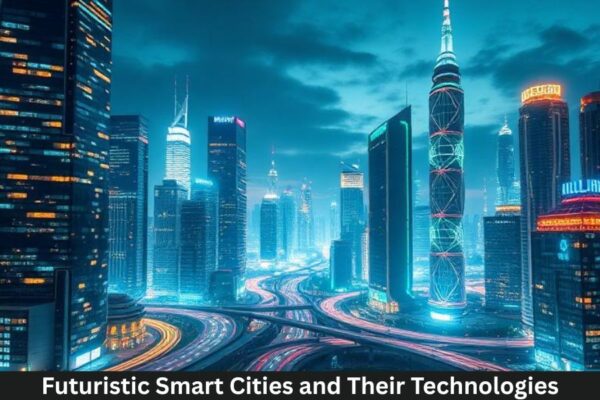
Smart cities are no longer sci-fi fantasies—they’re becoming reality faster than we expected. Imagine living in a city where traffic jams are a thing of the past, energy comes from self-sustaining grids, and your home adjusts itself automatically to your lifestyle. That’s the promise of futuristic smart cities, and today’s technologies are laying the foundation for them.
What Defines a Smart City?
A smart city uses advanced digital technologies to improve daily life. From transportation and healthcare to energy and communication, everything is connected and optimized. It’s like giving a city a brain—and the ability to think ahead.
The Evolution of Urban Innovation
Cities have always evolved with technology, but the speed today is unmatched. With breakthroughs in AI, IoT, and connectivity, the cities of the future will be smarter, cleaner, safer, and more efficient.
Core Technologies Powering Smart Cities
Internet of Things (IoT)
IoT is the backbone of smart cities. Think of it as a giant web of sensors and connected devices constantly collecting and sharing data.
Connected Sensors and Devices
These sensors monitor traffic flow, air quality, energy usage, waste levels, and more—allowing the city to respond in real-time.
Artificial Intelligence and Machine Learning
AI processes huge amounts of data faster than any human ever could.
Predictive City Management
AI can predict traffic congestion, manage energy distribution, and even anticipate water supply issues—before they become problems.
5G and Ultra-Fast Connectivity
Fast, stable, and low-latency internet is the heartbeat of smart cities. 5G makes instant communication between millions of devices possible.
Cloud and Edge Computing
Cloud computing stores massive datasets, while edge computing processes information instantly right where it’s generated, reducing delays.
Transportation Technologies in Smart Cities
Autonomous Vehicles
Self-driving cars will reduce accidents, eliminate human error, and improve fuel efficiency. Cities may one day have entire fleets of autonomous taxis.
Smart Traffic Systems
Traffic lights optimized by AI adjust based on real-time vehicle flow—reducing congestion and improving road safety.
Hyperloop and Future Transit Systems
The hyperloop could shorten intercity travel from hours to minutes, reshaping how we live and work.
Energy and Sustainability Innovations
Renewable Energy Integration
Solar panels, wind turbines, and other green technologies will supply most of the energy in futuristic cities.
Smart Grids
Smart grids balance energy distribution, ensuring stable supply and efficient usage. They can even predict energy demand spikes.
Waste Reduction and Recycling Technologies
Automated waste separation systems and smart bins help reduce pollution and improve recycling rates.
Smart Homes and Intelligent Buildings
Home Automation Systems
Smart homes use AI to adjust lighting, temperature, and appliances automatically.
Energy-Efficient Building Designs
Buildings of the future will generate and recycle their own energy, using advanced materials and sustainable architecture.
Intelligent Security Solutions
AI-powered cameras, facial recognition, and smart locks protect homes and public areas more effectively.
Public Safety and Security Technologies
AI Surveillance Systems
Advanced surveillance systems detect threats, monitor crowds, and prevent crime through predictive analysis.
Emergency Response Automation
AI dispatch systems can send help faster by identifying the closest available responders.
Healthcare Innovations in Smart Cities
Telemedicine and Remote Monitoring
Doctors can treat patients remotely, reducing hospital wait times and improving access to care.
AI-Powered Diagnostics
AI can scan medical images, identify diseases, and recommend treatment options with high accuracy.
Education and Smart Learning Environments
Digital Classrooms
Future classrooms will use smart boards, tablets, and online platforms supported by AI tutors.
Virtual and Augmented Reality Learning
Students can explore historical events in VR or conduct 3D science experiments in AR.
Urban Planning and Data-Driven Management
Digital Twins
A digital twin is a virtual replica of a city used to simulate changes, test ideas, and optimize planning.
Predictive Analytics for City Growth
AI forecasts population trends, infrastructure needs, and economic shifts to help cities plan smarter.
Economic and Social Impact of Smart Cities
Job Creation
New industries—AI development, robotics, green energy—create thousands of jobs.
Improved Quality of Life
Cleaner air, better public safety, efficient mobility, and smarter services all lead to happier, healthier citizens.
Challenges and Risks of Building Smart Cities
Data Privacy Issues
With so much data being collected, privacy and ethical concerns become major challenges.
Cybersecurity Threats
Hackers targeting smart infrastructure could disrupt entire city systems.
Cost and Infrastructure Limitations
Building a futuristic city requires huge investment and long-term planning.
Future Trends and What’s Next
Fully Autonomous City Ecosystems
Cities may eventually run themselves, with almost every service automated and optimized by AI.
AI-Managed Everything
From waste disposal to healthcare to education—AI could orchestrate an entire city like a conductor leading a symphony.
Conclusion
Futuristic smart cities are more than a dream—they’re closer to reality every day. With advancements in AI, IoT, robotics, transportation, and energy, we’re entering a new era where cities become intelligent, efficient, sustainable, and deeply connected. While challenges exist, the benefits far outweigh the risks. The cities of the future promise a world where technology enhances every part of our lives.
FAQs
1. What is the main goal of a smart city?
To use technology to improve quality of life, sustainability, and efficiency.
2. How will autonomous vehicles impact smart cities?
They reduce congestion, improve safety, and enhance mobility for everyone.
3. Are smart cities safe from cyberattacks?
Smart cities require strong cybersecurity systems to protect against threats.
4. What role does AI play in future cities?
AI analyzes data, predicts issues, optimizes services, and supports decision-making.
5. Will all cities eventually become smart cities?
Most major cities are moving toward smart technologies, but full implementation varies by region.