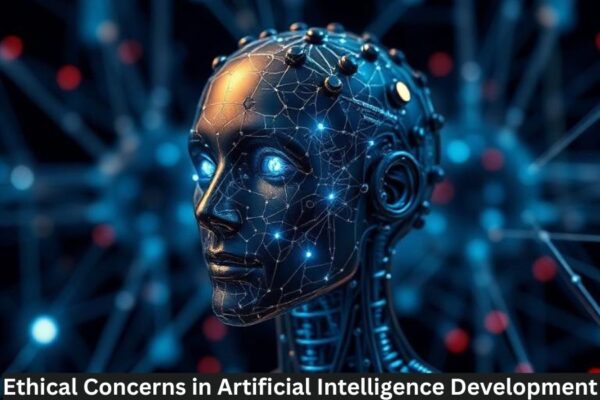
Artificial Intelligence is revolutionizing the world, but like any powerful technology, it comes with ethical concerns we can’t ignore. As AI grows smarter and more autonomous, the need for responsible development becomes more urgent. Let’s break down the major ethical challenges shaping the future of AI—and why they matter for everyone.
Introduction to AI Ethics
Why Ethics Matters in AI
AI systems are shaping decisions about healthcare, hiring, security, and even justice. When a machine’s choices affect real people, ethics becomes just as important as innovation.
The Rapid Rise of AI and Its Implications
From chatbots to self-driving cars, AI has moved from theory to reality almost overnight. This fast evolution brings new questions about fairness, safety, and accountability.
Transparency and Explainability Issues
The “Black Box” Problem
Many AI models operate like mysterious black boxes—powerful, but unclear in how they reach their conclusions.
Why Explainable AI (XAI) Is Crucial
Users and regulators need to understand AI’s decision-making process to trust it. Without transparency, even the best AI can face skepticism.
Impact on Trust and Accountability
A lack of explainability can lead to mistakes going unnoticed—and no clear way to assign responsibility.
Data Privacy and Surveillance Risks
AI’s Dependence on Big Data
AI feeds on data. The more personal data it gets, the better it performs—but the greater the privacy risk.
How AI Enables Surveillance Technologies
Facial recognition, real-time tracking, and predictive policing show how AI can become a tool for mass surveillance.
Balancing Innovation and Privacy
The challenge is using AI to innovate without turning everyday life into a monitored environment.
Bias and Discrimination in AI Systems
How Bias Enters Machine Learning Models
Bias often sneaks in through training data—if the data is biased, the AI will be, too.
Examples of Bias in Real-World AI
- Hiring tools preferring certain genders
- Facial recognition misidentifying minorities
- Loan approvals disadvantaging specific groups
Strategies to Reduce AI Bias
- Better-quality datasets
- Regular auditing
- Diverse development teams
Job Displacement and Economic Inequality
Automation’s Impact on Employment
AI can automate repetitive tasks, which is great for productivity—but risky for workers in vulnerable jobs.
Industries Most at Risk
- Manufacturing
- Customer service
- Transportation
- Retail
Preparing the Workforce for an AI Future
Upskilling and reskilling initiatives are essential to ensure workers remain relevant in an AI-driven world.
Safety, Security, and Misuse of AI
Risks of Autonomous Systems
Self-driving cars and drones must be extremely safe, as errors can be life-threatening.
AI Weaponization Concerns
AI-powered weapons raise concerns about autonomous killing machines and global instability.
Protecting AI from Cyber Attacks
AI itself can be hacked or manipulated, making cybersecurity a major ethical priority.
Ethical Challenges in Generative AI
Deepfakes and Synthetic Media Concerns
Generative AI can create realistic fake videos or voices, which can be misused for scams, misinformation, or harassment.
Intellectual Property Issues
Who owns AI-generated art or music? This question is still up for debate.
Ethical Use in Content Creation
Creators must balance using AI tools with respecting originality, accuracy, and authenticity.
AI Governance and Global Regulations
Current Regulatory Gaps
AI is evolving faster than laws can keep up, leaving many areas unregulated.
Global Approaches to AI Governance
The EU, United States, and Asia all have different strategies, creating a patchwork of regulations.
Need for International Standards
A unified global framework can ensure safe and ethical AI development across borders.
Moral Responsibility and Accountability
Who Is Liable When AI Fails?
If an AI makes a harmful decision, who is responsible? The developer? The user? The AI itself?
Rethinking Responsibility in AI Systems
Clear guidelines are needed to determine responsibility in autonomous systems.
Human Oversight vs. Automation
Critical decisions must still involve human judgment, especially in healthcare, law, and safety.
The Future of Ethical AI
Designing Ethical Frameworks
AI must be designed with fairness, transparency, and user safety at its core.
Role of Developers, Companies, and Governments
Ethical AI is a shared responsibility—everyone involved must take part in shaping the future.
Building AI That Aligns With Human Values
Ethics shouldn’t be an afterthought. It should be built into AI from day one.
Conclusion
AI development is full of potential—but also ethical challenges that require careful navigation. From privacy issues to bias to accountability, the future of AI depends on how well we manage these concerns. If humanity wants AI to be a tool for good, ethical development must lead the way.
FAQs
1. What is the biggest ethical issue in AI today?
Bias in AI systems is currently one of the most serious ethical concerns.
2. Can AI ever be completely unbiased?
Probably not—but it can be made significantly more fair with proper design and oversight.
3. How does AI impact privacy?
AI often requires large amounts of personal data, raising concerns about surveillance and misuse.
4. Who regulates AI development?
Different countries have their own laws, but global standards are still developing.
5. Why is explainability important in AI?
It helps users trust AI systems and ensures accountability w